Blog
MX 2973 3-Pin Male XLR Mic Connector Review 2026 | Price, Specs & Verdict | ProAudio Video

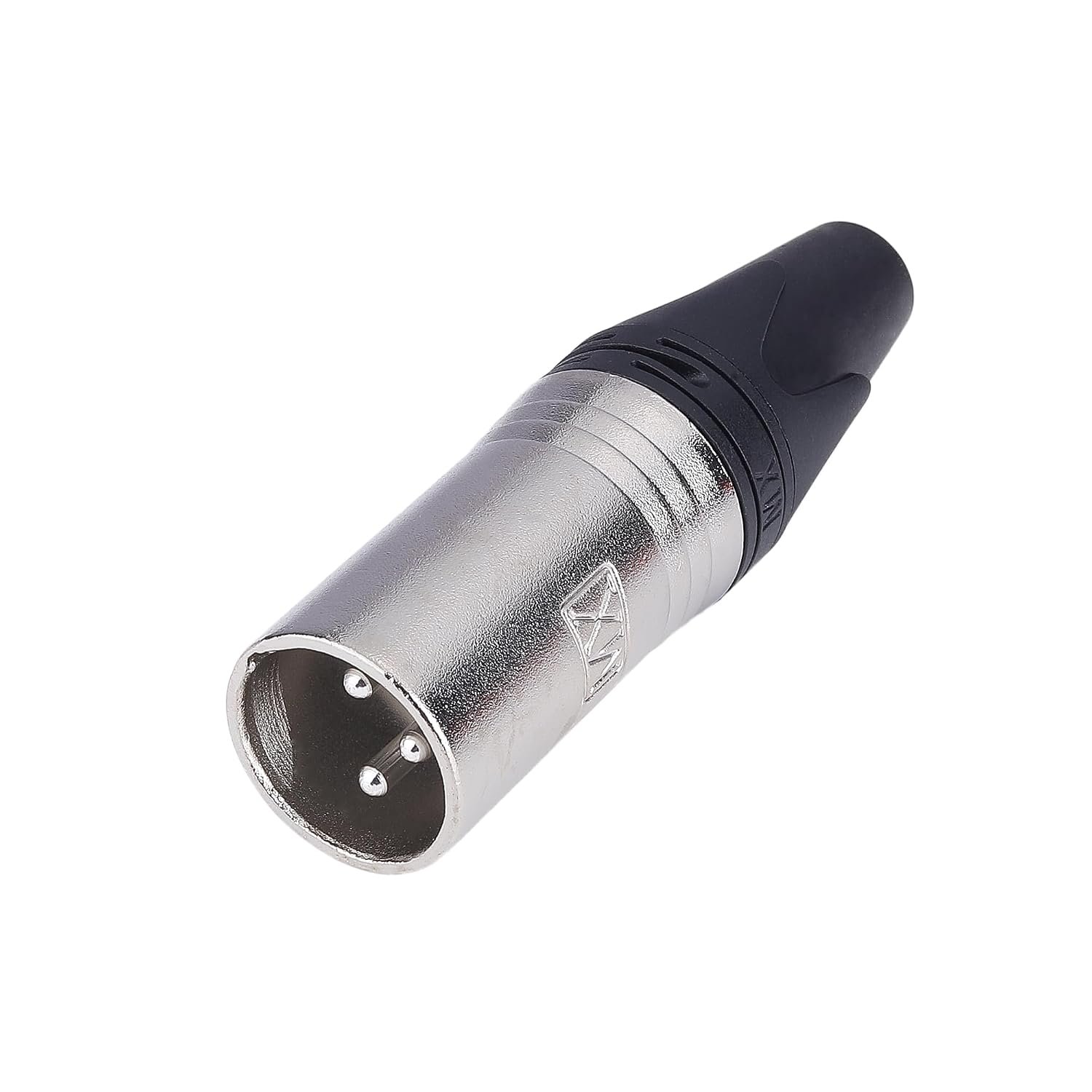
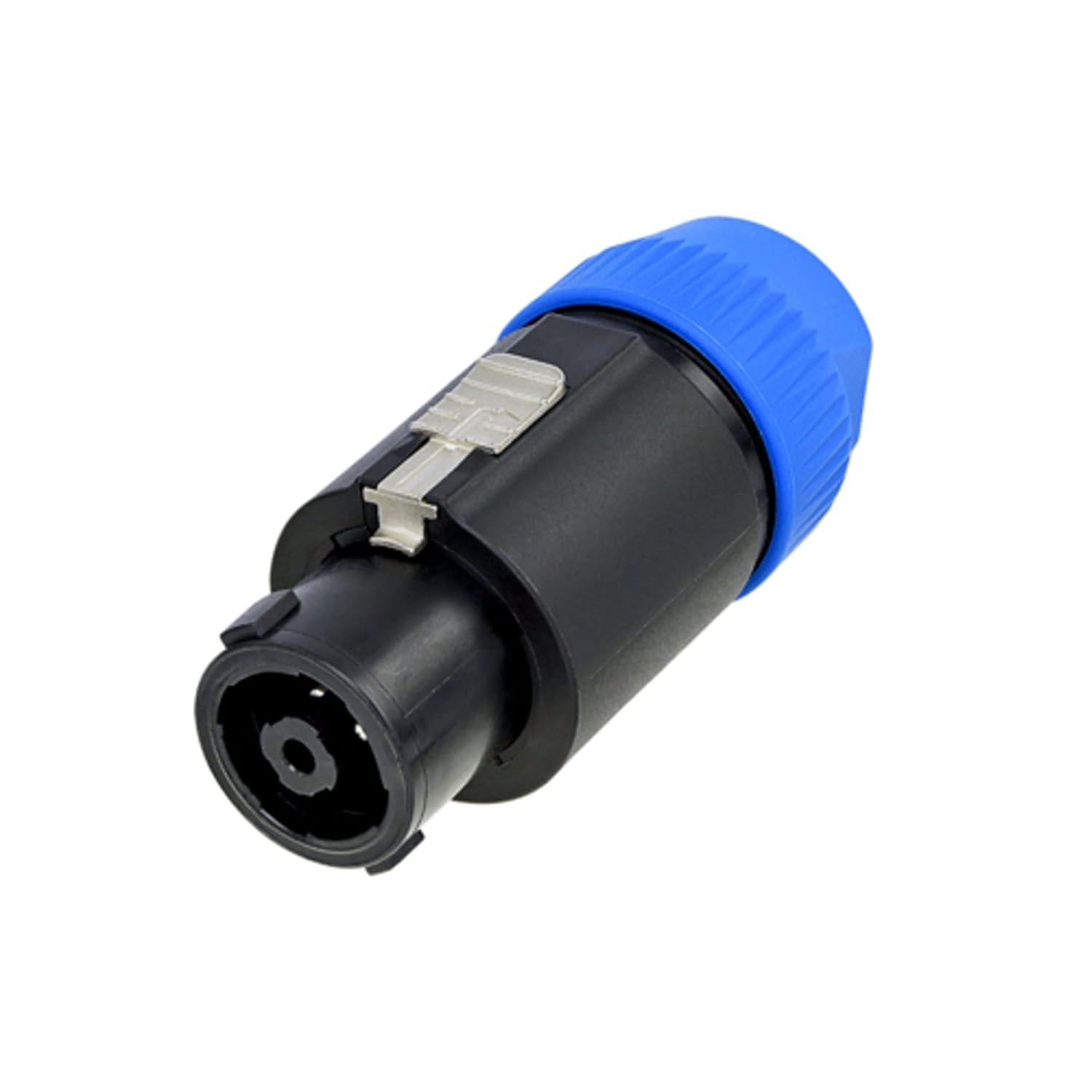
MX 2973 3-Pin Male XLR Mic Connector
A die-cast metal, latching 3-pin male XLR plug that lets you build your own balanced mic cables in India without paying import-brand prices.
The MX 2973 is a professional-grade 3-pin male XLR cable connector built for balanced microphone and line-level interconnects, and it sells in India for ₹500 at ProAudio Video. It is the plug end you solder onto a length of two-core shielded microphone cable to make your own custom-length mic leads, stage snakes, patch cables and rack looms. XLR remains the global standard for balanced audio because it carries signal on pins 2 and 3 with ground on pin 1, and the MX 2973 implements that standard with a die-cast metal housing, machined contact pins and a positive latch that stops the cable being yanked out mid-performance.
This connector is aimed at the person who builds rather than buys — the live sound engineer maintaining a hire inventory, the studio owner wiring a patchbay, the AV integrator running microphone lines in a conference room, and the working musician who is tired of replacing ₹300 ready-made cables every six months. If you have ever had a mic go silent during soundcheck because a moulded connector failed internally where you cannot repair it, the case for buying good connectors and building your own cables in India makes itself. At ₹500 the MX 2973 sits at the sensible middle of that market.
⚡ Quick Specifications at a Glance
✅ Pros
- Die-cast metal shell gives full 360° shield continuity — real RF and EMI rejection, not a plastic body pretending
- Secure latching mechanism holds firmly in mixer, mic and stage-box sockets
- Machined contact pins keep contact resistance low and survive repeated plug cycles
- Standard XLR footprint — mates reliably with every microphone, console, interface and DI box in use today
- Field-repairable: a solder joint you can fix at the venue, unlike sealed moulded cables
❌ Cons
- Requires soldering skill and a decent iron — not a plug-and-play purchase
- Manufacturer does not publish detailed current, voltage or cable-OD figures
- At ₹500 it is not the cheapest bulk-buy option if you are terminating fifty cables at once
Sound Quality & Signal Performance: What a Connector Actually Does
A connector cannot make audio sound better — but a bad one can absolutely make it sound worse, and that distinction is the whole reason to care about the MX 2973. The failure modes of cheap XLR plugs are predictable: thin stamped contacts that develop oxide films and add contact resistance, weak spring tension that lets pins go intermittent when the cable is flexed, and a shell that does not maintain shield continuity so the cable’s braid stops doing its job at the last two centimetres. Each of those shows up as crackle, hum, dropouts or a raised noise floor — problems engineers usually blame on the microphone or the console.
The MX 2973 addresses these with machined rather than stamped contact pins and a die-cast metal housing that bonds the cable shield to the connector body. Balanced transmission works by sending the audio signal in opposite polarity on pins 2 and 3; any interference picked up along the run lands equally on both conductors and is cancelled at the receiving differential input. That common-mode rejection only performs to specification if the two signal legs stay electrically identical and the shield is properly grounded at the connector — precisely what a solid metal-shell plug guarantees.
In practice this matters most in the environments Indian sound engineers actually work in: stages lit by dimmer packs throwing switching noise, banquet halls with LED drivers and cheap SMPS units everywhere, and long cable runs from a stage box to a front-of-house position 30 metres away. Terminate that run with the MX 2973 and the cable’s shielding performs end to end. Terminate it with a plastic-bodied bargain plug and you have built an antenna at each end of an otherwise good cable. Full audio bandwidth passes without colouration — a passive connector has no frequency response of its own to speak of, which is exactly the point.
Build Quality & Design: Die-Cast Metal, Latch and Strain Relief
The MX 2973 uses a die-cast metal barrel finished for corrosion resistance, which is the single most important build decision in a connector at this price. Metal shells do three jobs simultaneously: they carry the shield connection, they survive being dropped onto a concrete stage floor, and they resist the slow crush damage that flight cases inflict on plastic bodies over a touring season. The connector follows the standard XLR mechanical profile, so it seats correctly in every panel socket, stage box and console input you will encounter in India.
The latch is the part users interact with most. A male XLR plug locks into a female socket and releases only when the tab is pressed, which is why XLR became the professional standard in the first place — you cannot accidentally disconnect a vocalist’s microphone by walking past the cable. The MX 2973’s latch engages positively with an audible click and holds under lateral tension.
Inside, the solder cups are large enough to work with comfortably and are spaced so that a moderately experienced builder will not bridge pins 2 and 3 with a careless joint. The cable clamp grips the outer jacket rather than the conductors, which is the correct way to build strain relief: mechanical stress goes into the jacket and the shell, never into your solder joints. That is the design detail that determines whether a cable lasts three months or three years.
One honest caveat: MX does not publish a maximum cable outer-diameter figure, so if you are terminating unusually thick 7 mm or 8 mm jacketed cable, check fit before buying a large quantity. For standard microphone cable in the 5–6 mm range — which covers almost everything sold in India — it is a non-issue.
Features & Compatibility: Where the MX 2973 Fits in Your Rig
The 3-pin male XLR is the output end of a microphone cable. In a typical build you solder an MX 2973 to one end of two-core shielded cable and a matching 3-pin female XLR to the other, giving you a mic lead of exactly the length you need — a genuinely useful capability when the alternative is coiling three metres of excess cable behind a podium. The same connector terminates line-level runs between a mixing console and powered speakers, feeds from a DI box, sends to outboard processors, and permanent wiring inside equipment racks and wall plates.
Compatibility is universal by design. The MX 2973 mates with the female XLR sockets on dynamic and condenser microphones, analogue and digital mixing consoles, audio interfaces, stage boxes, active PA speakers, power amplifiers, signal processors, wireless receivers and broadcast gear. It also passes 48 V phantom power for condenser microphones without issue, since phantom is delivered on the same pins 2 and 3 that carry the signal.
Wiring is the international standard: pin 1 to shield/ground, pin 2 to hot (positive), pin 3 to cold (negative). Getting pins 2 and 3 the wrong way round reverses polarity, which is inaudible on a single channel but causes bass cancellation when that source is mixed with a correctly wired one — the classic reason a kick drum disappears in a live mix. Build carefully, label your cables, and test every one with a cable tester before it goes into the case.
Value for Money in India 2026
At ₹500, the MX 2973 sits between the two poles of the Indian connector market. Unbranded XLR plugs from local suppliers start around ₹80–₹150 but frequently use stamped contacts and thin shells that fail within a season of gigging. Neutrik’s NC3MXX, the reference standard, typically retails in India between ₹250 and ₹600 per piece depending on the seller and whether you buy singly or in bulk. The MX 2973 lands in that professional band while being readily available in India with genuine retail backing rather than grey-market uncertainty.
The economics of building your own cables are straightforward. A pair of quality connectors plus five metres of decent microphone cable costs meaningfully less than a comparable ready-made professional lead in India, and — crucially — it is repairable. When a moulded ₹400 cable fails, it goes in the bin. When a cable you built with an MX 2973 fails, you spend ten minutes with a soldering iron. Across a hire inventory of forty cables, that difference is the entire argument. For a working professional in India, ₹500 per connector is not a cost; it is insurance against the one dropout that costs you a client.
Full Technical Specifications
| Specification | Details |
|---|---|
| Brand | MX |
| Model | MX 2973 |
| Type | 3-Pin Male XLR Cable Connector (Plug), Microphone Grade |
| Driver Size | N/A — passive connector, no transducer |
| Frequency Response | Full audio bandwidth (20 Hz – 20 kHz) pass-through; no inherent colouration |
| Impedance | N/A — passive interconnect; contact resistance kept low by machined pins |
| Sensitivity | N/A — passive connector |
| Max SPL / Power | N/A — carries mic and line-level balanced audio, including 48 V phantom power |
| Connectivity | 3-pin XLR male; solder-cup termination; pin 1 ground, pin 2 hot, pin 3 cold |
| Housing | Die-cast metal shell with shield continuity to cable braid |
| Latching | Yes — secure latch mechanism with release tab |
| Battery Life | N/A — passive component, no power required |
| Weight | Not published by manufacturer; typical for a metal-shell XLR plug |
| Dimensions | Standard XLR mechanical profile; compatible with all standard XLR sockets |
| Colour Options | Metal / nickel-tone finish |
| Warranty | 1 Year Manufacturer Warranty |
| Price in India | ₹500 — Buy at ProAudio Video |
⚖️ How the MX 2973 Compares
Neutrik NC3MXX
Approx. ₹250–₹600
The industry reference with a chuck-type strain relief; better documented but priced inconsistently across Indian sellers.
Amphenol AX3M
Approx. ₹300–₹500
Machined contacts and a nickel finish with broadcast pedigree, but harder to source through Indian retail channels.
Who Should Buy the MX 2973 3-Pin Male XLR Mic Connector?
✅ Buy it if you: build and maintain your own microphone and line cables and want metal-shell reliability without paying import-brand premiums; run a live sound or rental inventory in India where cables get abused and must be field-repairable; are wiring a studio patchbay, equipment rack or conference-room AV installation and need connectors you can trust in permanent looms; or are a musician who wants mic leads cut to the exact lengths your stage setup requires.
❌ Skip it if you: do not solder and simply need a ready-made mic cable off the shelf; are terminating very large quantities where bulk pricing on another brand makes a material difference to your budget; or need a specific documented current or voltage rating for a compliance-driven install, in which case choose a connector with a published datasheet.
Frequently Asked Questions About the MX 2973
What is the price of MX 2973 in India?
The MX 2973 is priced at ₹500 in India. You can buy it from ProAudio Video, one of India’s leading pro audio and video retailers, with fast delivery across India including Mumbai, Delhi, Bangalore, Hyderabad, Chennai, Kolkata and more.
Is the MX 2973 good for building microphone cables?
Yes. It is designed specifically for that job. The die-cast metal shell maintains shield continuity, the machined pins keep contact resistance low, the latch prevents accidental disconnection, and the cable clamp grips the outer jacket so mechanical stress never reaches your solder joints. Pair it with a matching 3-pin female XLR and quality two-core shielded cable.
What is the warranty on MX 2973 in India?
The MX 2973 comes with a standard 1-year manufacturer warranty in India. ProAudio Video provides after-sales support and can assist with warranty claims. Always check current warranty terms at purchase as these can change.
What are the best alternatives to MX 2973 in India?
Top alternatives in the ₹250–₹600 range include the Neutrik NC3MXX (approx. ₹250–₹600 — the industry reference standard with a chuck-type strain relief) and the Amphenol AX3M (approx. ₹300–₹500 — machined contacts with broadcast pedigree but harder to source in India). You can browse all XLR connector options at ProAudio Video.
Does ProAudio Video ship the MX 2973 across India?
Yes, ProAudio Video ships the MX 2973 to all major cities across India including Mumbai, Delhi, Bangalore, Pune, Hyderabad, Chennai, Ahmedabad, Kolkata and more. Order here for the best price and fast delivery.
How do I wire the MX 2973, and does it pass 48 V phantom power?
Wire it to the international standard: pin 1 to the cable shield and ground, pin 2 to hot (positive), pin 3 to cold (negative). Keep pins 2 and 3 consistent at both ends or you will invert polarity. Yes, it passes 48 V phantom power for condenser microphones, because phantom is carried on the same pins 2 and 3 that carry the audio signal.
🏆 ProAudio Video Verdict
The MX 2973 does the unglamorous job of a professional XLR connector properly — die-cast metal shell, machined pins, a latch that holds and a clamp that protects your solder joints. It loses points only for thin published documentation. If you build your own cables in India, this is a sound, repairable, professional choice at ₹500.