Blog
Panasonic Eneloop Pro Battery Review 2026 | Price, Specs & Verdict | ProAudio Video

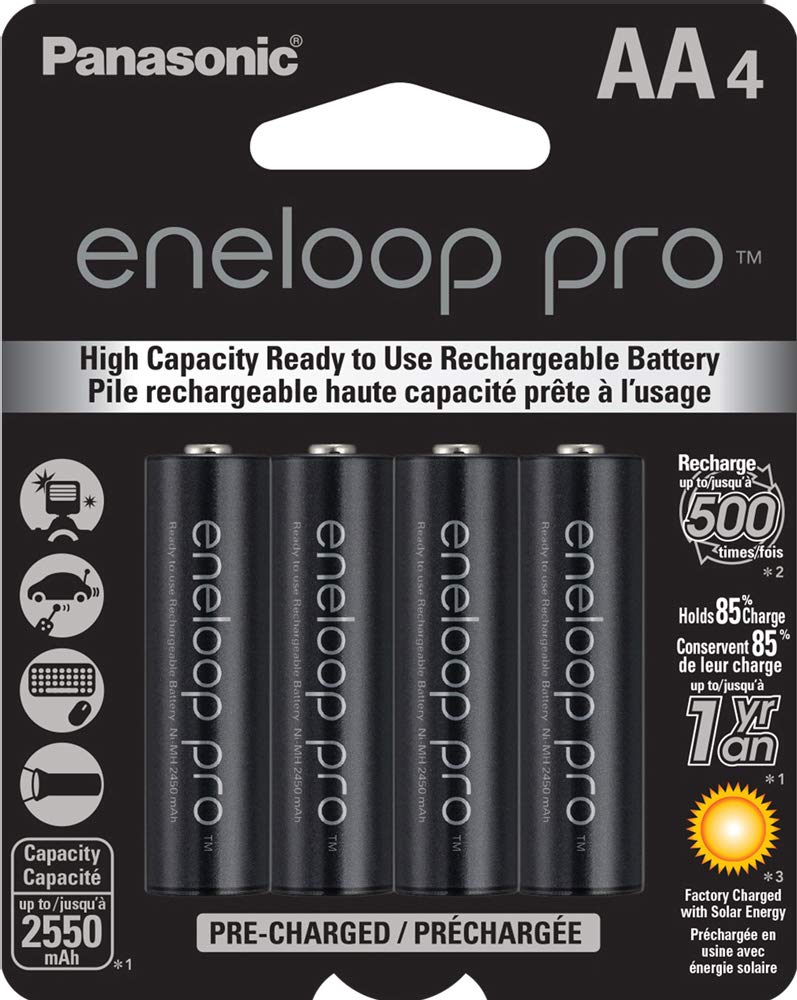
Panasonic Eneloop Pro Battery (AA, 2550mAh)
The highest-capacity Eneloop you can buy in India — built for wireless mics, camera flashes and any high-drain gear that must not die mid-session.
The Panasonic Eneloop Pro Battery is a high-capacity 2550mAh AA Ni-MH rechargeable cell designed for equipment that draws heavy current — wireless microphone transmitters, camera flash units, in-ear monitor beltpacks, DMX remotes and field recorders. Priced at ₹1,400 for a 4-cell pack in India, it sits at the premium end of the rechargeable AA market, and it earns that position with roughly 25% more usable capacity than a standard Eneloop plus the low self-discharge chemistry that made the Eneloop name in the first place. If you have ever had a lavalier transmitter drop out ten minutes before the end of a wedding ceremony, this is the battery that exists specifically to stop that happening. In a country where load-shedding, humid summers and long outdoor shoots are all normal working conditions, a cell that holds 85% of its charge after a full year on the shelf is not a luxury — it is insurance.
This review is aimed at working professionals and serious hobbyists in India: sound engineers running Sennheiser or Shure wireless systems, wedding and event photographers cycling speedlights all day, podcasters using battery-powered field recorders, and AV integrators who keep a drawer of spares for client sites. If your devices sip power slowly — TV remotes, wall clocks, a mouse — the Eneloop Pro is the wrong tool and you should buy the standard Eneloop instead. But for high-drain duty at ₹1,400 a pack, the Pro is the most dependable AA you can put in a mic body.
⚡ Quick Specifications at a Glance
✅ Pros
- 2550mAh typical capacity — roughly 25% more runtime than a standard 2000mAh Eneloop
- Holds voltage under heavy load, so wireless mic transmitters and flashguns keep working instead of browning out
- Low self-discharge: about 85% of charge still present after a year in the bag
- Ships pre-charged (solar-charged at the factory) and works down to roughly -20°C
- Made in Japan, no memory effect, and it recharges up to 500 times — far cheaper per use than alkalines
❌ Cons
- Only ~500 charge cycles versus about 2,100 for the standard Eneloop — shorter overall service life
- At ₹1,400 per 4-pack it is one of the priciest AA options sold in India
- 1.2V nominal output means a few older alkaline-designed devices read it as “low battery” even when full
Power Delivery and Real-World Performance
What separates the Eneloop Pro from a generic 2800mAh no-name cell is not the number on the wrapper — it is the voltage curve. Ni-MH chemistry sits at a nominal 1.2V rather than the 1.5V of an alkaline, but it holds that 1.2V almost flat for the majority of the discharge and then falls off a cliff at the end. Cheap high-capacity cells sag under current draw, and sag is what kills a wireless microphone: the transmitter’s RF stage browns out, the receiver hears a dropout, and the recording is ruined. The Pro’s high-drain construction keeps the internal resistance low, so a Sennheiser EW or Shure BLX bodypack sees stable voltage right up to the point the pack is genuinely empty. In practice, users running 2550mAh Pro cells in wireless bodypacks report a meaningful runtime gain over 2000mAh cells — often the difference between one long shift and needing a mid-event swap.
The same logic applies to camera flashes. Flash recycle time is a direct function of how fast a battery can dump current into the capacitor, and the Eneloop Pro is consistently among the fastest-recycling AA options tested by photography reviewers. Over a long Indian wedding day, faster recycling means fewer missed frames during the varmala or the pheras. Field recorders and portable mixers, which draw steadily rather than in bursts, simply run longer. The trade-off, and it is a real one, is cycle life: high-capacity Ni-MH chemistry is stressed harder, so Panasonic rates the Pro at up to 500 recharges rather than the 2,100 of the standard cell. For a professional replacing cells every two or three years anyway, that is an acceptable price for the extra headroom.
Build Quality and Design
Physically the Eneloop Pro is a standard AA / LR6 / HR6 cell — 14.5mm in diameter and 50.4mm long, weighing about 30g per cell, so a 4-pack adds roughly 120g to your kit bag. It fits every AA-powered device that takes a normal alkaline, including recessed bodypack compartments where some fatter third-party cells bind. The livery is the giveaway: matte charcoal-black wrap with the eneloop logotype and a small “pro” mark, deliberately different from the white standard Eneloop so you can tell your high-drain stock from your remote-control stock at a glance inside a dark equipment case. That sounds trivial until you are backstage with a torch in your teeth.
Panasonic manufactures these cells in Japan, and the build tolerances show in two places that matter operationally. First, the terminals are cleanly finished and stay corrosion-free far longer than budget cells — important in coastal Indian cities like Mumbai and Chennai where humidity attacks contacts. Second, the seals are good: leakage, the failure mode that destroys a ₹60,000 wireless transmitter, is extremely rare on genuine Eneloop stock. That last point is why sourcing matters. Counterfeit Eneloops circulate widely in Indian grey-market channels, and buying from an authorised retailer such as ProAudio Video at ₹1,400 is the simplest way to be certain the cells inside the blister are the real thing.
Features, Charging and Compatibility
The headline feature is low self-discharge (LSD). Older Ni-MH cells were useless as spares because they would drain themselves flat in a month; the Eneloop Pro retains around 85% of its charge after a full year of storage, which means the pack you charged before the last shoot is still usable at the next one. Panasonic pre-charges the cells with solar energy at the factory, so they work straight out of the blister pack — a small thing, but useful when the gear arrives on the morning of a job. There is no memory effect, so you can top up a half-used cell without degrading it, and the operating range extends down to about -20°C, which matters for anyone shooting in Ladakh, Spiti or high-altitude Himalayan locations.
Charging is where users most often go wrong. Because the Pro is a high-capacity cell, it benefits from a smart charger with per-cell (independent channel) termination — something like the Panasonic BQ-CC55 or an Eneloop Advanced charger — rather than a cheap dumb charger that charges cells in series pairs and overcooks whichever cell fills first. A good charger will meaningfully extend the working life of the 500 cycles you have paid for. The cells carry no proprietary electronics, so they are compatible with any standard Ni-MH charger, and they are a drop-in replacement in Sennheiser EW/XSW transmitters, Shure BLX and SLX bodypacks, Rode wireless kits, Godox and Canon speedlights, Zoom and Tascam recorders, and DMX/lighting remotes. Note that some Sennheiser systems offer a proprietary BA accupack; the Eneloop Pro is the sensible open-standard alternative at ₹1,400.
Value for Money in India 2026
At ₹1,400 for four cells, the Eneloop Pro is not cheap in absolute terms — you can find unbranded 2800mAh AAs online for a fifth of that. The arithmetic that matters, though, is cost per use. Rated at up to 500 recharges, a single ₹1,400 pack replaces something like 500 sets of disposable alkalines. Even at a conservative real-world figure of 300 usable cycles, the per-session cost is a few rupees. Set against that, one ruined wedding recording or one leaked cell inside a transmitter costs vastly more than the entire pack. For working professionals in India, the Eneloop Pro is best understood as insurance rather than a consumable, and it is priced accordingly. Buyers who only need power for low-drain household devices genuinely should not pay this premium — but for high-drain pro audio and photo gear, this is the rational purchase.
Full Technical Specifications
| Specification | Details |
|---|---|
| Brand | Panasonic |
| Model | eneloop pro AA (BK-3HCCE / BK-3HCDE series) |
| Type | AA (LR6 / R6 / HR6) Ni-MH low self-discharge rechargeable |
| Typical Capacity | 2550mAh typical (2500mAh minimum) |
| Nominal Voltage | 1.2V per cell |
| Recharge Cycles | Up to 500 cycles |
| Charge Retention | Approx. 85% after 1 year of storage |
| Memory Effect | None — partial top-ups are safe |
| Pre-charged | Yes, solar-charged at the factory; ready to use |
| Operating Temperature | Rated for use down to approx. -20°C |
| Weight | Approx. 30g per cell (approx. 120g per 4-pack) |
| Dimensions | 14.5mm diameter × 50.4mm length (standard AA) |
| Pack Contents | 4 × AA rechargeable cells with storage case |
| Country of Manufacture | Japan |
| Warranty | 1 Year Manufacturer Warranty |
| Price in India | ₹1,400 — Buy at ProAudio Video |
⚖️ How the Eneloop Pro Compares
Panasonic Eneloop (Standard) AA 2000mAh
₹1,500
Lower 2000mAh capacity but around 2,100 recharge cycles — the better buy for low-drain gear and long-term economy.
Duracell Rechargeable AA 2500mAh
₹1,100
Similar headline capacity at a lower price, but weaker charge retention in storage and no published cycle rating.
Who Should Buy the Panasonic Eneloop Pro Battery?
✅ Buy it if you: run wireless microphone systems (Sennheiser EW/XSW, Shure BLX/SLX, Rode) and need a full shift out of one charge; shoot weddings or events with speedlights where flash recycle time decides whether you get the shot; work with field recorders, IEM beltpacks or portable mixers that must not die mid-take; or keep a pre-charged spare set in the kit bag for weeks at a time and need it to still be full when you reach for it.
❌ Skip it if you: only power low-drain devices like TV remotes, wall clocks, mice or kids’ toys — the standard Eneloop is cheaper per cycle and lasts four times as many recharges; want the absolute lowest lifetime cost and do not need peak runtime; or own an older device that misreads 1.2V Ni-MH cells as flat and refuses to operate on them.
Frequently Asked Questions About the Panasonic Eneloop Pro Battery
What is the price of the Eneloop Pro in India?
The Panasonic Eneloop Pro is priced at ₹1,400 in India. You can buy it from ProAudio Video, one of India’s leading pro audio and video retailers, with fast delivery across India including Mumbai, Delhi, Bangalore, Hyderabad, Chennai, Kolkata and more.
Is the Eneloop Pro good for wireless microphones?
Yes. Wireless microphone transmitters are high-drain devices, and that is exactly what the Eneloop Pro is engineered for. Its 2550mAh capacity and low internal resistance keep the transmitter’s voltage stable through a long session, which reduces the risk of RF dropouts near the end of a charge. It is a drop-in replacement for AA cells in Sennheiser, Shure, Rode and similar bodypacks and handhelds.
What is the warranty on the Eneloop Pro in India?
The Panasonic Eneloop Pro comes with a standard 1-year manufacturer warranty in India. ProAudio Video provides after-sales support and can assist with warranty claims. Always check current warranty terms at purchase as these can change.
What are the best alternatives to the Eneloop Pro in India?
Top alternatives in the ₹1,000–₹1,600 range include the standard Panasonic Eneloop AA 2000mAh (₹1,500 — lower capacity but roughly 2,100 recharge cycles instead of 500) and the Duracell Rechargeable AA 2500mAh (₹1,100 — similar capacity, weaker long-term charge retention). You can browse all rechargeable battery options at ProAudio Video.
Does ProAudio Video ship the Eneloop Pro across India?
Yes, ProAudio Video ships the Panasonic Eneloop Pro to all major cities across India including Mumbai, Delhi, Bangalore, Pune, Hyderabad, Chennai, Ahmedabad, Kolkata and more. Order here for the best price and fast delivery.
How many times can the Eneloop Pro be recharged, and which charger should I use?
Panasonic rates the Eneloop Pro at up to 500 recharge cycles, compared with around 2,100 for the standard white Eneloop — the trade-off for its higher 2550mAh capacity. To get the full 500 cycles, use a smart charger with independent per-cell channels and proper termination, such as the Panasonic BQ-CC55 or an equivalent Ni-MH charger. Cheap series-pair chargers overcharge whichever cell fills first and will shorten the pack’s life.
🏆 ProAudio Video Verdict
The Panasonic Eneloop Pro is the AA cell to buy when failure is not an option. It trades cycle life for capacity and voltage stability, which is exactly the right trade for wireless mics, flashguns and field recorders — less so for remotes and clocks. At ₹1,400 it is a professional tool, priced like one, and worth it.