
Sold out
Marshall
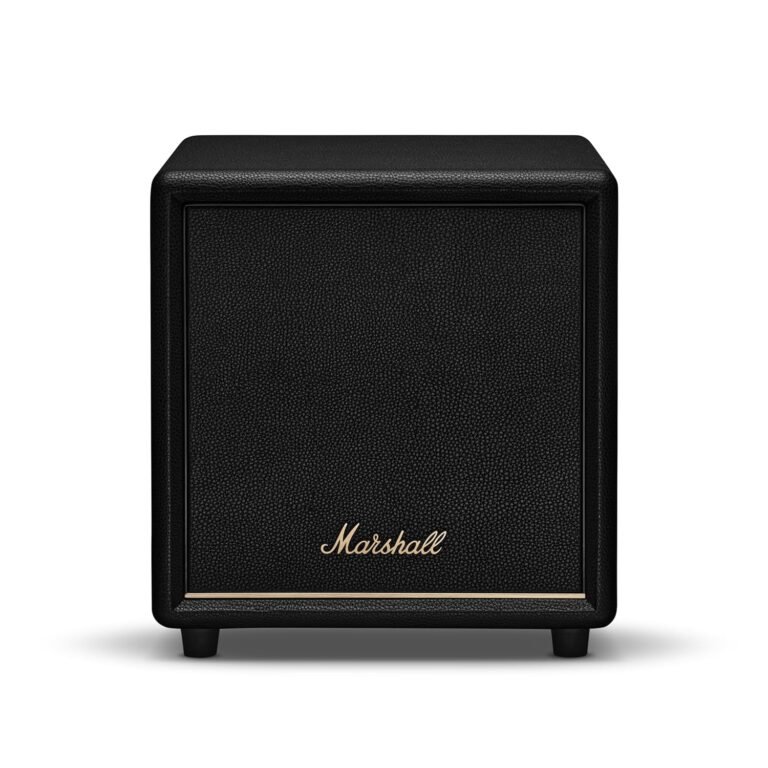
Marshall Heston Sub 200 Wireless Subwoofer With Bluetooth Le-audio
₹46,000
₹49,999
Same-day dispatch across India ·Cash on delivery up to ₹45,000
Need advice? Chat with an expert
1 product
1 product
Marshall
₹46,000
₹49,999
A subwoofer is a speaker built for one job: deep bass. It reproduces the lowest notes in music and the explosions, engine rumbles and orchestral swells in films that ordinary speakers cannot reach. Adding a subwoofer to a soundbar, a pair of bookshelf speakers or a full surround system is one of the most noticeable upgrades you can make. We stock powered subwoofers from JBL, Klipsch, Bowers & Wilkins, ELAC, Bose, Definitive Technology, Polk Audio, Marshall and Edifier, from compact 8-inch models to 12 and 15-inch units for dedicated theatres.
Almost every home subwoofer is "powered", meaning it has its own amplifier built in. Your AV receiver sends the low-frequency effects (LFE) channel and the bass from your other speakers to the subwoofer through a single cable. A crossover, usually set at 80 Hz, divides the work: speakers handle everything above it, the subwoofer handles everything below. This makes the whole system sound cleaner and louder.
Where you place a subwoofer affects the sound more than almost anything else. Start with it at the front of the room, near a side wall but not pushed into a corner. Try the "subwoofer crawl": put the sub at your seat, play a bass-heavy track, crawl around the room and listen for where the bass sounds smooth and even, then place the subwoofer there. Corners give more bass but can sound boomy.
Connect the subwoofer to the "Sub Out" or "Pre Out LFE" of your AV receiver. Run the receiver's auto-calibration (Audyssey, Dirac or YPAO), which sets the level, distance and crossover. Set your other speakers to "Small" so their deep bass goes to the subwoofer. Keep the subwoofer's own crossover at maximum or LFE mode, letting the receiver manage it.
Two subwoofers smooth out bass across more seats and reduce peaks and dips caused by the room. A single good subwoofer is enough for most living rooms, while dedicated theatres and large halls benefit from two.
Prices include GST and are updated automatically from our store. Call or WhatsApp us for the best price on bundles and bulk orders.
Yes. Use the amplifier's Sub Out or pre-out if it has one. If not, choose a subwoofer with speaker-level (high-level) inputs that connect with speaker wire.
As a guide, 8-inch suits rooms under 150 sq ft, 10-inch suits most living rooms up to about 300 sq ft, and 12-inch or larger suits bigger rooms and dedicated home theatres.
Sealed subwoofers are tighter and better for music. Ported subwoofers go deeper and louder, which is better for movies. Both work well in a mixed-use living room.
Only if your soundbar supports it. Most soundbar subwoofers work only with the same brand's soundbar, so check compatibility first or ask us.
Deep bass travels through walls and floors in apartments. Isolation pads under the subwoofer and keeping the level reasonable at night help a lot.
Start at the front of the room, near a side wall, then adjust using the subwoofer crawl method. Avoid placing it inside a closed cabinet.
Yes. You can hear several subwoofers at our Andheri West Experience Center along with home theatre systems.
Tell us about your room, your budget and what you listen to. Our team will suggest a setup that fits, or put together a quote for a complete system.